
Photographs are a means of communication. They do not make use of words yet they are an efficient means through which an event, emotion and even lifestyle can be explained to you. They are a captured view of something that occurred in less than 1 second and that second can be of great importance. This is why photographs are employed as a means of communication (Panke 2016, p. 4133). The captured images are made even more effective because of technological advancements. The creation of a faster lens, better cameras, HD quality and an easier means of assessing images has had a strong impact on the use of images for communication.
Now, one image can be used to relay information to people of different nationalities, ethnicities or cultures (Keshavarzi 2010, p. 856). Language is no longer a barrier when images are employed.
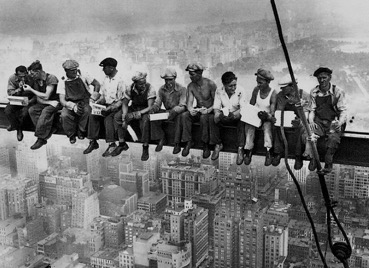
Documentary photography refers to the use of photographs to record important events, locations and even people for future reference or enlightenment. While this could be mistaken for photojournalism, documentary photography usually spans a longer period of time and has a different objective. The content of documentary photography varies. While there may be some misconceptions that this type of photography focuses on sober events or people, this is not always the case. Some photographs taken for documentary purposes are used to bring attention to an issue, to try and bring something into general acceptance or even evoke change. An example of a documentary photographer who documented subjects other than war, famine or tragedy was Lewis Hine. Hine documented the construction of the Empire state building (Shales 2011, p.132 ). His photographs told a story of challenges and successes that occurred during the construction and he even put himself at risk to capture these images. This documentary was on a significant event and location.
Documentary photographs are also impactful as a tool for creating social change. Photographs are a means of explaining issues. A properly captured photograph can humanize events and people that you have never met before. Effectively used, a camera can provide documents that inspire people to raise awareness on issues and make changes, that were previously ignored (Young 2008, p.254). The easy dissemination of images also means that photographs taken with the aim of inspiring social change have a global reception and can have a widespread impact.
The origin of documentary photography dates back to the 1800s. In 1851, the Historic Monuments Commission hired 5 photographers to take pictures of architectural monuments all over France. The photographs were to be used to display historical buildings in France. The five photographers took about 300 photographs altogether. When these photographs were examined, it was seen that the photographers had different techniques. This made the images less cohesive than intended (Vassallo 2014, p.18). While these pictures were never published, the documenting of these buildings show that documentary photography was already in use (Roubert 2012, p.2 ).
A decade later, from 1861- 1955, Over a dozen photographers documented the events of the American civil war. Hence there are more than 6000 photographs which document the war. The significance of the event and the duration of the event means that this qualifies as documentary photography (Covkin 2014, p.16).
One impact of using cameras to document significant events is that the image is open to public viewership. This exposure can lead to more people being aware of an issue and consequently pushing for change. The power of photographs is why some individuals take photographs with the aim of encouraging social change (Harper 1998, p.56).
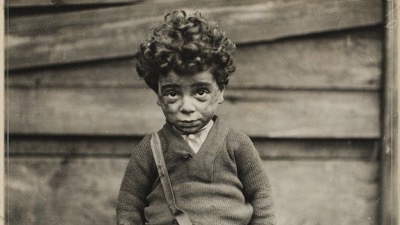
The use of the camera for social change is not a new concept. One of the earliest situations where the camera was used for this purpose is in the exploration of child labor. Hine is a notable figure for his attempt at using the camera to bring social change. Over the course of 11 years (1907-1918), Hines documented the use of child labor in factories and mills within the United States. Entering these factories using varying disguises, he photographed the appalling conditions that children from the age of 8 were made to work in. These photographs created awareness of the use of child labor and the photos were used as evidence that helped in the approval of the Child Labor laws (Yaacob, Azahari & Ismail 2013, p.188). He also raised awareness on poverty, poor housing situations, immigrant living and other matters that required social reform.
Figure 2 is one of the many pictures taken by Lewis Hine. He began taking pictures of child laborers in factories and mill to document the conditions the children worked in. These pictures also showed how young the child workers were and emphasized the dangers the children encountered while working with huge machinery. On it’s own, the photograph had little impact but the photograph documentary of child laborers by Lewis Hine was used as evidence that ensured the child labor law was passed.
Ellen Tolmie (UNICEF’s Senior Photography Editor until June 2013) explained that UNICEF has employed documentary photography to create awareness on the living conditions of children all over the world. She further stated that documentary photography is indispensable when explaining the realities of children living in different countries. While these photographs have not solved child poverty, they have been instrumental in encouraging donors to contribute to UNICEF and provide aid to needy children (UNICEF 2013).
Documentary photography is also used to show the progress of UNICEF is regions where they are active.
Figure 3 was taken by UNICEF’s photographer. The purpose of this photograph was to show the progress made by this child under the care of UNICEF health workers. The toddler in the photograph was suffering from malnutrition, however the intervention of UNICEF improved this issue. Another purpose of this photograph was to encourage people to contribute to bettering the lives of people who have little. The use of this picture and many other similar images have persuaded UNICEF contributors to continue aiding the organization.
Similarly, Gideon Mendel (a photographer) has actively pursued the use of documentary photography to show the world the effect of HIV/AIDS. He began documenting the effects of HIV/AIDS in the 1990s and many of his photographs have been used to create awareness of HIV/AIDS, show the view of life through the eyes of people living with this disease (Fussell 2013).
In 2007, Mendel started working on a photo documentary ‘Drowning World’ which showed the impacts of climate change, flooding and emphasized the need for environmental care (Strecker n.d.). Mendel’s work has been effective in raising awareness of both issues.
Despite the arguments for the effectiveness of the camera as a tool for social change, it can also be argued that solely the camera may not be as effective. First, to achieve social change, there needs to be a social acceptance or recognition of the issue. Until that occurs, photographs will be ineffective in inspiring social change. Furthermore, while a photograph may be taken with the intention of promoting or bringing awareness to an issue if the image/images do not receive sufficient recognition, it will remain ineffective. For this reason, it can be argued that the camera plays a minor part in bringing social change.
In the world today, there are many photographers (professional and amateur). The ease with which pictures can be taken and disseminated could make it hard for many to stand out. Furthermore, the viral culture makes it so that pictures do not have a long shelf life before another viral photograph comes to light (Rohde 2013). Hence, even if a documentary photographer takes photographs with the aim of achieving social change, there is no guarantee that the picture will stand out from the thousand other pictures that are uploaded to the internet.
On the other hand, Hoijer (2004, p. 529) provides a different instance where the camera is not a tool for social change. Rather, he argues that tragic events are commodified by the media. Hence, the use of photographs to document tragedies may have 2 outcomes. The first outcome being sympathy and the second being ‘compassion fatigue’. He explained further that due to the regular manner in which tragic events were being displayed, the reaction to them shifted from sympathy to became indifference. In some other cases, individuals distanced themselves from the issue.
Similarly, in cases where photographers go to warring or third world countries to document issues such as killings or starvation, the images may generate sympathy among viewers. However, in the country or area the issue occurred there may be no means to redeem the situation. These photographs thereby bring awareness to an issue but may play no role in initiating change.
Rosler (1981) provides a different view on the criticism of documentary photography as an agent of social change. She argues that documentary photography does not bring about change. Instead, it is a sort of voyeurism into the lives of unfortunate or powerless individuals while reassuring better off individuals of their wealth and superiority. A sort of visual colonialism according to Bogre (2012). This is buttressed by La Grange (2005) who emphasized that the disconnected photography of a subject or situation may be seen as imperialistic and hence provides no aid to the victim involved. While the image may draw emotions of empathy, the image does not lead to change or aid the victims that are displayed
This view is supported by Sischy (1991:91) who states that photographing of tragic happening do not necessarily lead to change or a ‘call to action’. Rather, the images are admired for the beauty and this, in turn, eliminates the feelings that should be of sympathy or a need to act. She argued this while referring to Salagado’s work; some of which included pictures of poverty-stricken or suffering regions.
Despite the criticisms of documentary photography and views that the camera cannot bring change, there are many photos that prove the opposite. Taking pictures of something worthy of concern brings attention to the matter. It humanizes events that we may be unable to relate to and provides information for scenes we cannot imagine.
Importantly, photographs cannot create changes on their own. Captured images make people aware of truths. For this reason, it can be argued that the camera is an aid to social change.
 Elohor's Blog